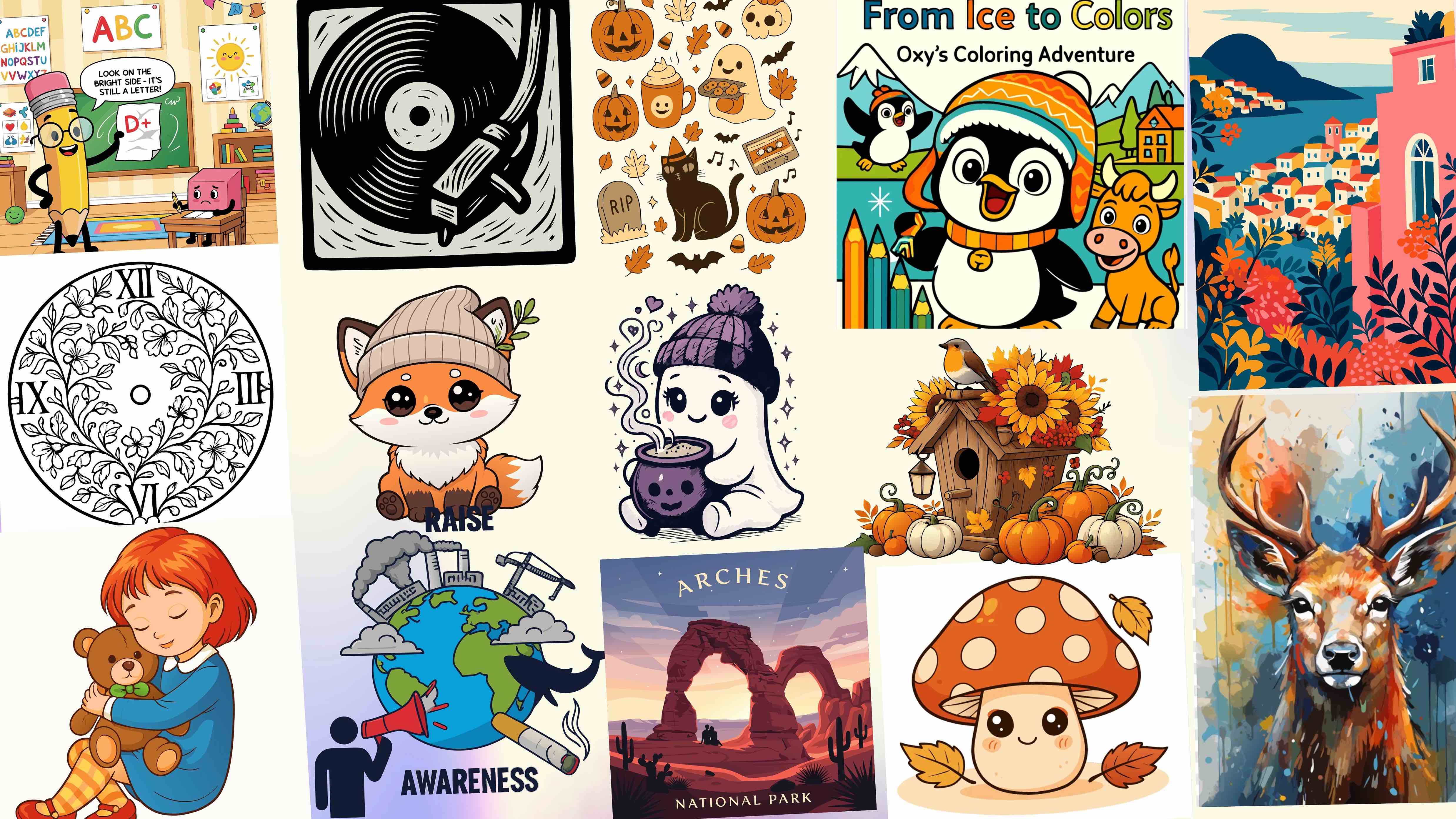
Can AI Make Professional Logos? Unlocking SVG Vectors for Print-Ready, Web-Optimized, and Scalable Branding
The promise of AI in design is captivating: instant logos from a simple idea. But for a business, the real question isn't just about getting an image. It's about obtaining a professional, versatile, and technically sound brand asset. This guide moves beyond surface-level analysis to examine the core of AI logo creation: the SVG vector file. We'll explore the entire journey, from AI text prompts to final, print-ready and web-optimized SVG files, providing a clear framework for evaluating tools and integrating them into a practical workflow.
The Core Question: Can AI Truly Create Professional Logos?
A professional logo is defined by three pillars: strategic concept, aesthetic quality, and technical execution. AI currently excels in the second, shows promise in the first, but often falters in the third without human intervention. It can generate a wide array of visually appealing concepts at unprecedented speed, acting as a powerful ideation partner. However, the journey from a generated concept to a professional asset—ensuring unique brand alignment, legal safety, and technical perfection—still relies on critical human judgment and skill. AI is a transformative tool in the designer's kit, not an autonomous replacement.
SVG Files Explained: The Universal Standard for Digital & Print
At the heart of professional logo file types is the SVG (Scalable Vector Graphic). Unlike raster images (like PNG or JPG) made of pixels, SVGs are built from mathematical points and paths. This key difference grants them two superpowers: infinite scalability without quality loss and extremely small file sizes for web use. For any logo that must look crisp on a mobile screen, a business card, or a billboard, a true, editable SVG vector file is non-negotiable. It is the master file from which all other formats are derived.
The AI Generation Spectrum: From Text Prompts to Vector Graphics
The magic of modern AI vector generators lies in text-to-vector graphic technology. You describe a concept such as "a bold, geometric eagle icon for a security firm"—and the AI interprets this into structured vector shapes. Trained on vast datasets of images and vector paths, these tools generate multiple original concepts in seconds. This process democratizes the initial creative stage, bypassing the need for sketching skills and allowing for rapid exploration of styles, from minimalist and modern to hand-drawn and intricate.
Inside the Toolbox: AI Vector Generators vs. General SVG Creators
- AI Vector Generators: Specialize in creating new vector graphics from text descriptions. Their output is the starting point.
- General SVG Creators/Editors: Tools for manually drawing, assembling, and, most importantly, editing existing vector files. This is where refinement happens.
The most effective workflow uses an AI SVG generator for concept creation and a dedicated online SVG editor for the essential cleanup and customization required for professional use.
The Output Test: Defining "Print-Ready" in an AI-Generated SVG Logo
A "print-ready" logo file demands rigorous technical standards that raw AI output often misses. A truly print-ready AI-generated SVG must have:
- Clean, Simplified Paths: No unnecessary nodes or overlapping shapes that cause printing errors.
- Closed Shapes: All paths must form complete loops to hold color.
- Outlined Text: Any typography converted to vector paths to preserve design integrity across all computers.
- Appropriate Color Space: CMYK or Pantone definitions for accurate color reproduction, not just screen RGB.
Achieving this requires passing the AI-generated SVG through a professional SVG editor for verification and correction.
Optimization Essentials: Making AI SVGs Web-Friendly
For digital use, optimization is key for performance. A web-friendly SVG should be:
- Minified: Excess metadata, editor comments, and code formatting removed.
- Clean: Paths simplified to reduce file size without visible change.
- Accessible: Contains descriptive
<title>and<desc>tags. - Properly Coded: Uses inline styles efficiently. This ensures fast loading, which is critical for user experience, and allows for smooth CSS styling and animation.
The Non-Negotiable Advantage: Scalability for Multi-Use Branding
The strategic value of a vector-based logo is future-proof scalability. A single, well-crafted SVG file can adapt to any application—from a tiny social media favicon to massive outdoor signage—without degradation or the need for multiple files. This guarantees absolute brand consistency across all physical and digital touchpoints, a cornerstone of professional identity that AI-generated vectors can deliver if the underlying file is technically robust.
Quality Audit: Technical Metrics for a Usable SVG File
Before trusting an AI-generated SVG, conduct a quick technical audit in an editor:
- Openability: Does it open cleanly in a professional editor like Adobe Illustrator or an online SVG editor?
- Path Integrity: Are shapes composed of logical, editable paths, or a chaotic mess?
- Purity Check: Does it embed any raster (pixel-based) elements that break true scalability?
- Structure: Are elements logically grouped or layered for easy editing?
This determines if the file is a usable vector asset or merely an image trapped in an SVG container.
Beyond Logos: AI for Icons, Illustrations, and Laser-Cut Files
The utility of text-to-vector AI extends far beyond logos, tapping into vast keyword searches:
- Custom Icons: Generate unique sets for UI/UX design with an AI SVG icon generator.
- Spot Illustrations: Create on-brand graphics for blogs and marketing.
- Manufacturing Files: Produce vectors for laser cutting, engraving, or CNC routing. This requires extremely clean, single-line paths—a perfect example of AI-generated concepts refined by manual precision in an SVG file editor.
The Crucial Next Step: From Generator to Editor
The raw output from an AI SVG generator is rarely the final product. The most critical phase is transitioning this draft into an online SVG editor. This step acknowledges that generation is just the beginning. Editing is where an asset is perfected for brand alignment, technical correctness, and practical applications.
Manual Refinement: Path Cleanup, Node Editing, and Color Correction
This is the hands-on polish applied in an SVG image editor:
- Path & Node Cleanup: Simplifying AI's often-complex paths, aligning points, and closing gaps for a clean, manufacturable, and printable file.
- Color Management: Ensuring brand color accuracy and converting color spaces.
- Typography Finalization: Auditing kerning and legally securing font usage before converting text to outlines.
This manual SVG cleanup is what transforms a promising AI concept into a dependable, professional-grade vector asset.
Comparative Review: Top AI-Driven SVG Logo Creation Tools
An objective analysis of AI logo tools must focus on SVG output quality, editability, and commercial readiness. Based on testing and analysis 7 Best AI SVG Logo Generators platforms , here's how key platforms compare for startups and professionals seeking vector file output:
SVGMaker: Often highlighted for its direct svg logo generator engine from text and integrated online SVG editor. It prioritizes delivering an editable, clean vector file from the start, focusing on the technical asset over broad brand kits. This editor-centric approach makes it a strong contender for users who need direct control over the final vector output. Downloadable formats include: SVG (pixel-perfect, optimized, compressed), PNG, JPG, WebP, React (.jsx), React Native, HTML/CSS, PDF, EPS, AI, and DXF.
Design.com: Where other tools hand you a logo file and call it done, Design.com's AI logo generator builds an entire brand identity around it. The AI generates industry-specific concepts from your business name and keywords, and a custom-trained chat interface lets you refine designs while keeping every output copyright-safe. What really sets it apart is brand auto-sync: your logo's colors and typography automatically carry across business cards, email signatures, social media posts, and letterheads without any manual work. Downloadable formats include: SVG, EPS, PDF, high-resolution PNG, and JPG with transparent background support.
Looka: A robust brand identity platform. It excels at generating cohesive logo concepts and full brand guides. However, its primary downloadable logo files are often raster-based (PNG), with true SVG access typically tied to higher-tier plans. Its strength is in holistic branding, not necessarily in providing an immediately editable master vector file.
LogoAI: Similar to Looka, it provides AI-driven logo creation with a strong focus on generating mockups and brand applications. While it offers SVG downloads, the focus is on speed and a wide variety of template-inspired concepts for quick business launch.
Designs.ai: Functions as a suite of AI design tools (logos, graphics, videos). Its logo generator is one component within a larger system. It provides vector file exports (SVG, EPS), positioning itself as a multi-tool for content creation.
The Hybrid Workflow: Integrating AI Generation with Professional Editors
The most efficient modern process is a hybrid loop:
- Ideate with an AI text-to-vector generator
- Select & Download the best vector logo files
- Refine your selected vector logo with small adjustments using an AI SVG editor, and apply more precise manual changes through a built-in online SVG logo editor.
Practical Applications: When to Choose an AI SVG Tool
An AI SVG logo generator is an excellent choice for:
- Startups & Entrepreneurs: Needing a cost-effective, credible visual identity to launch with.
- Designers & Agencies: For rapid client concepting and mood boarding.
- Marketers & Content Teams: Needing custom icons or simple graphics for campaigns.
- Product Prototyping: When a visual placeholder is needed to test a concept.
It is less ideal for complex branding projects requiring deep, unique narrative symbolism without significant human redesign.
Limitations and Considerations: The Current State of AI Vector Design
Acknowledging limitations is key to effective use:
- Conceptual Genericness: AI can recombine learned styles, potentially leading to derivative work.
- Technical Imperfection: Messy paths, open shapes, and color space issues are common.
- Lack of Strategic Nuance: It interprets prompts, not business strategy or market nuance.
- IP Ambiguity: Copyright ownership of AI-generated designs is an evolving legal area.
Frequently Asked Questions (FAQs)
1. Can I get a truly unique logo from an AI SVG generator?
While AI generators produce original combinations based on your prompt, true uniqueness comes from strategic input and subsequent customization. The AI provides a unique starting point, but refining it with specific colors, typography, and manual adjustments in an online SVG editor is what creates a logo distinct to your brand.
2. Is an SVG file really better than a PNG for my logo?
Yes, for a primary logo file, an SVG is superior. A PNG is a raster format—it can become pixelated when scaled. An SVG is a vector file, meaning it uses mathematical paths to stay perfectly crisp at any size, from a website favicon to large-format print. You will export PNGs from your SVG for specific web uses, but the SVG is your master file.
3. I have an AI-generated SVG. Why does it look blurry when I resize it?
If a supposed SVG gets blurry, it likely contains embedded raster (pixel-based) elements or is not a true vector. Open the file in a professional SVG editor and check if the shapes are made of editable paths. A true, clean SVG will not blur upon scaling.
4. Are AI-generated logo designs copyrighted? Can I trademark them?
Copyright for AI-generated works is a complex, evolving legal area. Most AI logo generator services grant you a commercial license to use the output. However, to secure a trademark, the design typically must be significantly modified by a human to demonstrate unique, human-authored authorship. Always consult with a legal professional for trademark-specific advice.
5. What's the main difference between an AI SVG generator and a template-based logo maker?
An AI SVG generator creates a new graphic from your description. A template-based maker lets you customize pre-existing designs with different icons, fonts, and colors. AI generation offers more originality from the start, while templates can be faster but may limit uniqueness.
6. Do I need design skills to use an AI SVG logo generator effectively?
Not for the generation phase. The power of text-to-vector AI is that you can use descriptive language. However, basic design sense helps in crafting effective prompts. For the crucial refinement step, familiarity with an online SVG editor—even for simple tasks like checking colors or simplifying paths—is highly valuable.
7. Which is more cost-effective for a startup: an AI logo tool or a human designer?
For an initial, viable brand identity, an AI SVG logo generator is significantly more cost-effective, often costing a small monthly fee or one-time payment. A human designer brings strategic insight, guaranteed uniqueness, and technical perfection but at a higher investment. Many startups begin with an AI tool for their MVP and later invest in professional redesign as they grow.
Final Verdict: AI as a Catalyst in the Accessible Vector Design Era
AI is not replacing the designer; it is reshaping the design pipeline. By automating initial concept generation, it makes the first steps of professional vector graphic creation remarkably accessible. The future lies in the symbiotic workflow: human creativity and strategy guiding AI tools, which produce drafts for human refinement and precision. The result is a faster, more iterative path to a professional, scalable, and technically sound brand identity centered on the versatile, powerful SVG file.