10 Best AI Fantasy Character Generators Compared: Which Tool Creates the Best Results?
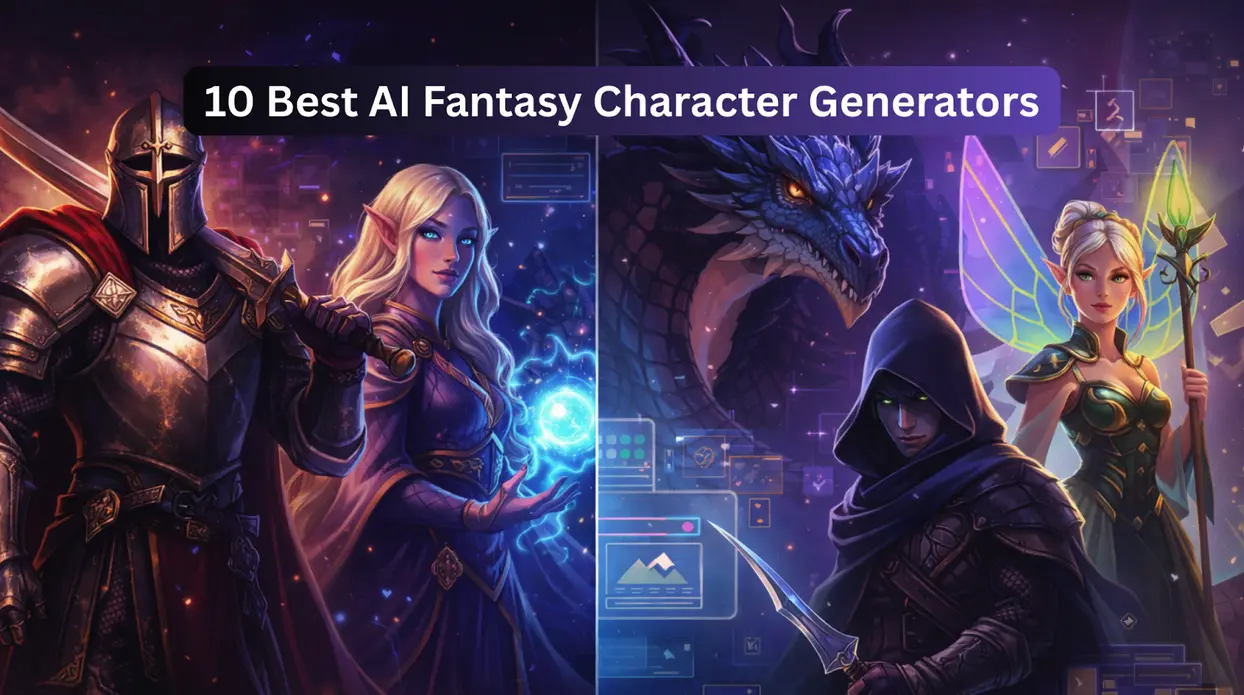
Fantasy art has always captured the imagination. From powerful sorcerers and armored warriors to mystical elves and dark creatures, fantasy characters bring stories and games to life. Today, AI fantasy character generators make it possible to create these visuals in seconds.
Whether you are a writer designing a book cover, a game developer building concept art, or a tabletop RPG player crafting a character portrait, the right tool makes all the difference.
In this guide, we compare the 10 best AI fantasy character generators, evaluate what they do well, and help you decide which one creates the best results for your needs.
What Makes a Great AI Fantasy Character Generator?
Before comparing tools, it helps to understand what really matters.
Output Quality
Does the tool create sharp, detailed, and expressive characters? Are lighting, textures, and proportions realistic or stylized in a pleasing way? According to research from Stanford University, the quality of AI-generated images has improved dramatically, with modern models producing images that are increasingly difficult to distinguish from human-created art.
Prompt Understanding
Can the generator handle detailed descriptions such as "half elf warrior with silver armor, glowing sword, cinematic lighting"?
Customization
Does it allow control over pose, background, aspect ratio, or style?
Ease of Use
Is it beginner friendly or does it require technical knowledge?
Pricing and Commercial Rights
Is there a free version? Can you use the images commercially?
Keeping these criteria in mind, let us look at the top tools.
Quick Comparison of The Top Fantasy character Generators
| Tool | Output Quality | Customization | Ease of Use | Pricing | Best For |
|---|---|---|---|---|---|
| SVGMaker | Excellent | Very High | Easy | Free and Paid | Multi-view SVG character sheets |
| Recraft AI | Excellent | High | Easy | Free and Paid | Detailed fantasy art |
| Midjourney | Outstanding | Medium | Medium | Paid | Cinematic artwork |
| Pixelcut | Good | Medium | Easy | Freemium | Portrait creation |
| DeepAI | Medium | Low | Very Easy | Free | Quick drafts |
| CharGen | High | Very High | Medium | Free | RPG campaigns |
| OpenArt | Good | Medium | Easy | Freemium | Artistic styles |
| Canva AI | Medium | Medium | Very Easy | Freemium | Casual creators |
| Adobe Firefly | Very Good | High | Medium | Subscription | Photo based fantasy |
| ImagineArt | Strong | Medium | Easy | Paid | Concept art |
1. SVGMaker
SVGMaker now offers a dedicated AI Fantasy Character Generator for creating heroes, villains, monsters, NPCs, and other original characters from a text description or reference image. Instead of producing one flat raster portrait, it creates a consistent multi-view character sheet as editable, scalable SVG artwork.
Key Features:
- Text and Reference Image Creation: Describe your character in plain language or upload an existing image to guide the design. The AI uses the character's appearance, colors, outfit, equipment, and distinctive features when creating the result.
- Multi-View Character Sheets: Each generation shows the same character in four consistent full-body views, giving artists, animators, game developers, and tabletop players a practical visual reference.
- Fantasy Categories and Art Styles: Choose from 15 character categories, including D&D, RPG, dragon, spellcaster, fantasy warrior, mythical creature, monster, villain, and NPC. Pair them with styles such as High Fantasy, Dark Fantasy, Grimdark, Anime Fantasy, or Retro Pixel Art.
- Editable Vector Output: The generated sheet is delivered as a scalable SVG with separately selectable character figures and a matching color palette, so individual elements can be moved, recolored, or refined without losing quality.
- Conversational Editing: Ask the AI to change a weapon, outfit, color, feature, or pose and generate a revised version within the same character-creation workspace.
- Multiple Export Formats: Download the editable SVG or export the character sheet to PNG, JPG, WEBP, BMP, and other major image formats for games, print, merchandise, or online use.
- Dedicated Character Workflow: The SVGMaker AI Fantasy Character Generator keeps prompting, references, generation history, preview, and editing together instead of sending users through the general SVGMaker landing page.
Output Quality: SVGMaker produces a cohesive character sheet with consistent colors and recognizable features across multiple views. The final SVG remains sharp at any size, and each detected figure is grouped separately for easier editing.
Best For: D&D and tabletop RPG players, dungeon masters, game developers, animators, fantasy and concept artists, mascot designers, and creators who need a reusable multi-angle character reference.
Pricing: New users can start with free credits, and each character-sheet generation uses credits from the account. Visit the pricing section for current pricing details.
Commercial Rights: Characters can be used commercially in games, tabletop campaigns, client work, asset packs, and merchandise without attribution.
2. Recraft AI
Recraft AI delivers strong detail and clean character structure. It excels at handling descriptive prompts and maintaining stylistic consistency across multiple generations, making it valuable for creating character series or maintaining brand consistency.
Strengths: The platform offers precise control over composition, allowing you to specify exact positioning of elements. It handles complex armor details, magical effects, and environmental lighting particularly well. The interface is intuitive, with preset styles that help beginners achieve professional results quickly.
Output Quality: Produces high-resolution raster images with excellent texture work and realistic lighting. Character proportions are generally accurate, and facial features show strong expressiveness.
Limitations: As a raster-based tool, images lose quality when scaled beyond their generated resolution. Limited post-generation editing capabilities mean you may need external software for refinements.
Best for: Authors and designers who want balance between control and quality for book covers, character concept sheets, and promotional materials. Works well for projects requiring consistent art style across multiple characters.
3. Midjourney
Midjourney is renowned for producing dramatic lighting and painterly fantasy scenes. The results often look like book covers or cinematic posters straight out of high-budget fantasy films. According to MIT Technology Review, Midjourney has become one of the most influential AI art generators in the creative industry.
Strengths: Unmatched atmospheric quality with cinematic composition. Exceptional at creating mood through lighting, color palettes, and environmental storytelling. The community aspect provides inspiration and prompt-sharing opportunities.
Interface: Operates through Discord, which may feel unfamiliar initially but enables real-time collaboration and community feedback. The command-based system offers powerful control once mastered.
Output Quality: Outstanding visual depth with painterly textures that feel hand-crafted. Characters often emerge from richly detailed backgrounds with professional-grade composition.
Limitations: Steep learning curve for prompt engineering. Subscription required with no free tier. Character consistency across multiple generations can be challenging. Discord-only interface may not suit all workflows.
Best for: Epic fantasy art, high-impact visuals for portfolios, book cover designers seeking dramatic scenes, and artists comfortable with experimental workflows.
4. Pixelcut
Pixelcut focuses on accessibility and speed, making it an excellent entry point for fantasy character creation. The streamlined interface removes technical barriers while still producing quality results.
Strengths: Remarkably user-friendly with guided prompts and templates. Fast generation times. Built-in background removal and basic editing tools. Mobile app availability makes it convenient for on-the-go creation.
Output Quality: Performs well for character portraits and bust shots with solid detail in faces and upper body elements. Clean character separation from backgrounds.
Limitations: Background details may lack depth compared to specialized tools. Full-body character generation can be inconsistent. Limited control over fine artistic details.
Best for: Beginners, content creators needing quick social media assets, RPG players creating character avatars, and mobile users wanting simple fantasy portrait generation.
5. DeepAI
DeepAI offers free generation and basic fantasy art capabilities without requiring account creation, making it the most accessible option for quick experimentation.
Strengths: Completely free with no credit limits. No signup required for basic use. Multiple art style options including fantasy-specific presets. API access available for developers.
Output Quality: Variable but adequate for concept sketches and idea exploration. Can produce surprisingly good results with well-crafted prompts, though consistency is less reliable than paid alternatives.
Limitations: Lower resolution outputs. Less sophisticated prompt understanding. Limited customization options. No built-in editing tools. Results can be unpredictable with complex descriptions.
Best for: Testing ideas quickly, students and hobbyists on tight budgets, rapid concept exploration, and learning prompt engineering without financial commitment.
6. CharGen
CharGen is purpose-built for tabletop RPG enthusiasts, going beyond simple portraits to create characters, monsters, and world-building assets specifically designed for gaming contexts.
Strengths: Specialized features for D&D-style character creation including race, class, and equipment options. Token generation for virtual tabletops. Consistent character generation for creating NPCs and party members. Built-in character sheet integration.
Output Quality: High-quality tokens and portraits optimized for virtual tabletop use. Consistent art style suitable for cohesive campaign aesthetics.
Customization: Extensive options for fantasy races (elves, dwarves, tieflings, dragonborn), class-specific equipment, and action poses. Background options themed for dungeons, forests, and fantasy locations.
Best for: RPG storytelling, dungeon masters needing NPC portraits, tabletop gaming groups, fantasy campaign world-building, and creating consistent visual assets for long-running games.
7. OpenArt
OpenArt provides stylistic variety and flexible prompts, allowing exploration of multiple artistic approaches from photorealistic to highly stylized fantasy aesthetics.
Strengths: Wide range of artistic styles including anime, watercolor, oil painting, and sketch aesthetics. Model selection lets you choose different AI engines for varied results. Community gallery provides inspiration and prompt examples. Offers some level of in-platform editing.
Output Quality: Good across various styles with particular strength in stylized and artistic interpretations. Less suited for photorealistic fantasy but excellent for illustrated character designs.
Limitations: Style consistency across generations can vary. Premium features required for highest quality outputs. Interfaces can feel overwhelming with many options.
Best for: Experimenting with fantasy styles, artists exploring different aesthetic approaches, character designers seeking unique visual styles, and creators who value artistic variety over consistency.
8. Canva AI
Canva AI integrates character generation into its familiar design interface, making fantasy character creation accessible within a broader creative ecosystem.
Strengths: Seamless integration with Canva's design tools for creating complete projects (posters, social media graphics, presentations) around your fantasy characters. Extremely beginner-friendly interface. Templates and layouts specifically for character showcases. Text-to-image within existing designs.
Output Quality: Solid for simple fantasy characters and stylized art. Works well when characters are part of larger graphic designs rather than standalone artwork.
Limitations: Not specialized for highly detailed or cinematic fantasy scenes. Less control over intricate fantasy elements like complex armor or magical effects. Output resolution may be limited compared to specialized AI art tools.
Best for: Casual creators, social media content with fantasy themes, educational presentations, marketing materials featuring fantasy characters, and users already in the Canva ecosystem.
9. Adobe Firefly
Adobe Firefly excels at transforming reference photos into fantasy versions, offering unique capabilities for photo-based character transformation within Adobe's professional ecosystem.
Strengths: Superior photo-to-fantasy conversion capabilities. Reference image upload for style transfer and character transformation. Excellent integration with Photoshop, Illustrator, and other Adobe products. Generative Fill allows adding fantasy elements to existing images. Commercial-safe training data reduces copyright concerns.
Output Quality: Very good, particularly when working from reference images. Maintains photographic quality while adding fantasy elements. Strong at consistent character generation when using reference photos.
Limitations: Requires Adobe Creative Cloud subscription. Less effective for creating characters entirely from text without reference images. Learning curve for leveraging full Adobe ecosystem benefits.
Best for: Professional workflows, photo-based fantasy transformations (turning portraits into fantasy characters), designers already using Adobe tools, and projects requiring tight integration with professional design software.
10. ImagineArt
ImagineArt produces strong concept art style outputs with particular excellence in fantasy warriors, mythical creatures, and dramatic character scenes suitable for professional portfolios.
Strengths: High-quality concept art aesthetic similar to game industry standards. Multiple AI models for different art styles. Batch generation for creating variations. Upscaling options for higher resolutions. Style reference system for maintaining consistency.
Output Quality: Strong detail in armor, weapons, and fantasy creature anatomy. Dynamic poses and action scenes. Excellent texturing on materials like leather, metal, and magical effects.
Limitations: Paid service with limited free credits. Interface learning curve for accessing advanced features. Generation times can be longer for highest quality outputs.
Best for: High-quality character concepts, artists building game art portfolios, concept artists needing reference material, game developers creating character designs, and professional fantasy illustrators seeking AI assistance.
Which Tool Creates the Best Results?
The answer depends on your purpose and workflow requirements.
- For scalable, editable fantasy art: SVGMaker is unmatched, offering vector output that works across all applications from mobile games to large-format printing.
- For cinematic and dramatic fantasy scenes: Midjourney often stands out with its painterly depth and atmospheric storytelling.
- For balanced quality and usability: Recraft AI performs consistently well with intuitive controls and reliable outputs.
- For RPG world building: CharGen is highly practical with specialized features for gaming contexts.
- For quick and simple portraits: Pixelcut and Canva AI are easy to use with minimal learning curve.
- For professional Adobe workflows: Adobe Firefly integrates seamlessly with existing creative processes.
There is no single winner for everyone. The best tool depends on your goals, budget, technical comfort level, and output requirements. Consider whether you need raster or vector format, the level of editability required, and how the artwork will be used across different media.
How to Get Better Results from AI Fantasy Generators
Even the best tool needs a good prompt. Here's how to improve your results:
- Be specific: Instead of writing "fantasy warrior," try "female elf warrior with silver armor, glowing blue sword, forest background, cinematic lighting, 4k quality."
- Mention lighting and mood: Words like dramatic, soft, glowing, misty, dark, rim lighting, or volumetric fog can significantly influence the final look.
- Include art style references: Specify painterly style, realistic rendering, anime inspired, gothic fantasy, concept art style, or digital painting to guide the aesthetic direction.
- Define composition: Specify "full body portrait," "head and shoulders," "action pose," or "three-quarter view" to control framing.
- Add environmental context: Mention specific settings like "ancient ruins," "mystical forest," "volcanic landscape," or "ice castle throne room" for richer backgrounds.
- Iterate and refine: Rarely is the first image perfect. Generate multiple variations, identify what works, and adjust your description accordingly. According to research from OpenAI, iterative prompt refinement significantly improves output quality.
- Use negative prompts: Many tools allow you to specify what you don't want, such as "no modern clothing, no realistic photography style, no blurry details."
Pricing and Commercial Use Considerations
Many tools offer free tiers with limited credits. Premium plans usually range from ten to thirty dollars per month depending on features, with some professional tools requiring higher tier subscriptions.
If you plan to sell prints, publish book covers, or monetize your artwork, check commercial licensing terms carefully. Key considerations include:
- Usage rights: Can you use images in commercial products?
- Attribution requirements: Must you credit the AI tool?
- Distribution limits: Are there restrictions on print quantities or digital distribution?
- Derivative works: Can you modify and resell the images?
Platforms such as SVGMaker provide commercial usage rights for generated characters, while other platforms may restrict certain uses or tie them to a subscription tier. Always review the current terms before launching commercial projects.
Common Mistakes to Avoid
- Using vague prompts: Generic descriptions like "cool fantasy character" produce generic results. Add specific details about appearance, equipment, setting, and mood.
- Ignoring aspect ratio: Choosing wrong dimensions can distort full-body characters. Portrait orientation (3:4 or 2:3) works better for standing characters, while square formats suit bust portraits.
- Overcomplicating prompts: Trying to include too many elements can confuse the AI. Focus on 3-5 key descriptive elements and add more details in subsequent iterations.
- Expecting perfection from a single generation: AI art requires experimentation. Generate multiple versions and cherry-pick the best elements.
- Forgetting to review licensing terms: This can create legal problems if you plan to sell your work or use it in commercial projects.
- Not saving prompt details: Keep a record of successful prompts for consistency and future reference, especially when creating character series.
- Neglecting post-processing: Even great AI output often benefits from minor refinements in editing software to perfect colors, remove artifacts, or enhance specific details.
Frequently Asked Questions
1. What is an AI fantasy character generator?
An AI fantasy character generator is a tool that creates character artwork based on text descriptions. You type in details about appearance, clothing, mood, and setting, and the AI generates a visual representation of that character within seconds. Modern generators use advanced machine learning models trained on millions of images to understand and interpret creative descriptions.
2. Which AI tool creates the most realistic fantasy characters?
Tools like Midjourney and Recraft AI are known for producing highly detailed fantasy characters with strong lighting and texture quality. For photorealistic portraits with complex lighting, Midjourney often leads, while SVGMaker excels at consistent multi-view character sheets delivered as editable vector artwork.
3. Are free AI fantasy generators good enough for professional use?
Free versions can produce impressive results, especially for concept drafts and personal projects. However, professional work such as book covers or commercial art benefits from editable output, clear usage rights, and consistent quality. Tools like DeepAI work for exploration, while production workflows may benefit from platforms such as SVGMaker, Midjourney, or Adobe Firefly.
4. Can I use AI generated fantasy characters for commercial projects?
Many AI tools allow commercial use under certain plans. SVGMaker allows generated characters to be used commercially without attribution, making them suitable for game assets, merchandise, book covers, and client work. Licensing varies by platform, so review each tool's current terms before using its output in paid products.
5. Do I need design skills to use an AI character generator?
No advanced design skills are required. Most platforms are user-friendly and work from text descriptions. However, learning how to write detailed prompts can significantly improve result quality. Understanding basic composition, lighting terminology, and art style names helps you communicate more effectively with the AI. Explore guides on AI-powered generation to improve your skills.
6. What kind of prompts produce the best fantasy character results?
Specific and descriptive prompts work best. Include details such as race (elf, dwarf, human), clothing and armor style, weapons or magical items, pose and expression, lighting conditions (dramatic, soft, rim lighting), environment (forest, castle, ruins), and art style (realistic, painterly, anime). For example, "dark elf sorcerer with glowing purple staff, elegant robes, dramatic storm background, cinematic lighting, concept art style" will perform better than simply "fantasy wizard."
7. Can AI generate full body fantasy characters?
Yes, most tools can generate full-body characters. To improve results, specify "full body portrait," "full body character design," or "standing pose" in your prompt and choose the appropriate aspect ratio (typically portrait orientation like 3:4 or 2:3). Some tools struggle with feet and hands, so you may need to generate multiple versions or specify "detailed hands and feet" in your prompt.
8. Why do some AI generated characters look distorted?
Distortion can happen if the prompt is unclear, overly complex, or contradictory. Too many conflicting instructions can confuse the model. Anatomical issues often occur with hands, feet, or unusual poses. Refining your description to focus on key elements, generating multiple variations, and using negative prompts (specifying what to avoid) usually improves outcomes. Some distortions can be fixed using advanced editing tools.
9. Can I edit AI generated fantasy art after creating it?
Yes. You can download images and refine them in design software like Photoshop, GIMP, or Inkscape. SVGMaker also supports conversational regeneration and built-in editing capabilities, allowing you to adjust colors, modify elements, and refine details without leaving the platform. Vector-based outputs provide more editing flexibility than raster images.
10. Which AI fantasy character generator is best for beginners?
Beginner-friendly platforms like Canva AI and Pixelcut are easiest to use because they have simple interfaces and guided options. However, SVGMaker offers an excellent balance of ease-of-use and professional capabilities, with a quick start guide that helps beginners create quality results quickly. More advanced tools like Midjourney may require more practice but offer greater artistic depth once mastered.
Final Thoughts
AI fantasy character generators have opened new creative possibilities for writers, game developers, designers, and enthusiasts. Whether you are building a game, writing a novel, designing custom artwork, or running tabletop campaigns, these tools can help bring your imagination to life.
The key is choosing the right platform for your needs and learning how to guide it with strong prompts. For projects requiring scalable, editable vector artwork that maintains quality across all sizes and applications, SVGMaker offers unique advantages. For cinematic raster art, tools like Midjourney excel. For specialized gaming needs, CharGen provides purpose-built features.
Start by exploring free tiers to test different tools, experiment with prompt crafting, and discover which workflow fits your creative process best. Check out the SVGMaker gallery for inspiration and explore various design categories to see what's possible with AI-generated fantasy art.